
Sri Lanka: Weather Alert: Deep Depression Weakens but Heads for North-Eastern Coast; Heavy Rain and Gale Winds Expected
By Lions Roar News Weather Desk
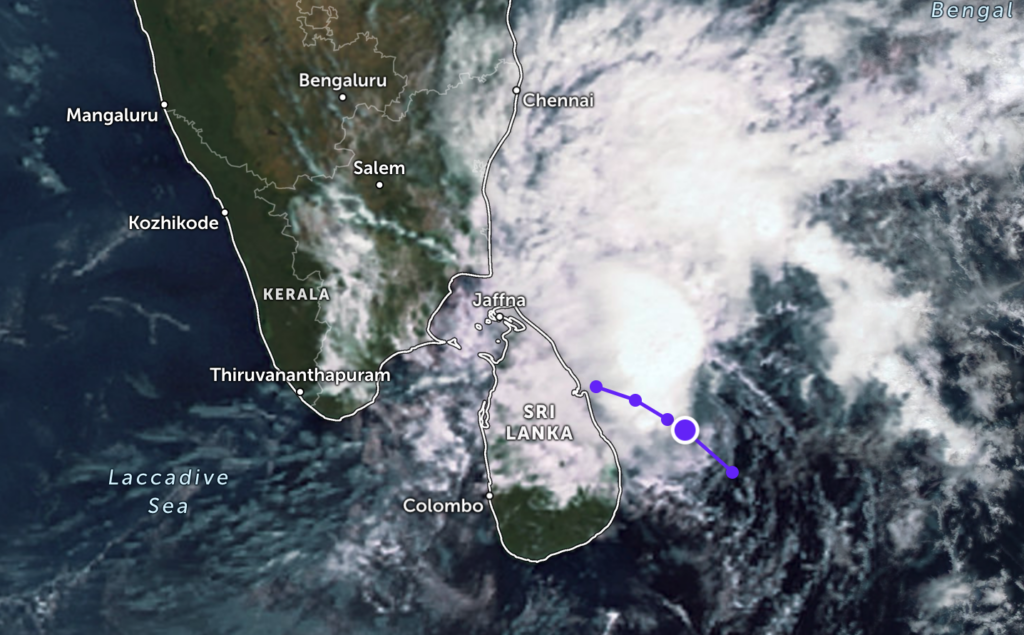
COLOMBO, SRI LANKA (January 10, 2026) — The Department of Meteorology has issued an urgent weather advisory as a deep depression in the Southwest Bay of Bengal begins its transition across the Sri Lankan coastline. As of 4:00 AM today, the system was located approximately 100 km North-Northeast of Trincomalee.
The system is expected to weaken into a standard depression as it moves North-West, likely crossing the coast between Trincomalee and Jaffna by midday today.
?️ Heavy Rain Forecast for Northern Districts
A thick cloud cover has already blanketed the northern half of the island. Residents should prepare for significant rainfall throughout the day:
- High Intensity Rain: Certain areas in the Northern Province are expected to receive heavy downpours exceeding 100 mm.
- Frequent Showers: Intermittent rain or thundershowers are predicted for the Northern Province as well as the Puttalam, Anuradhapura, and Trincomalee districts.
- Regional Outlook: Several spells of rain are expected in Kurunegala, Polonnaruwa, and Matale, while other parts of the island may see localized thundershowers during the evening or night.
? Dangerous Wind Warnings
The depression is bringing intense wind speeds that pose a risk to property and maritime activities.
- Northern Province: Expect very strong winds between 50-60 km/h, with aggressive gusts reaching up to 70 km/h.
- Central & Western Regions: Strong winds of 40-50 km/h are forecast for the North-Western Province, as well as Matale, Trincomalee, and Nuwara Eliya districts.
?️ Safety Advisory
The Department of Meteorology urges the public to take immediate precautions to minimize damage from lightning and temporary strong winds during thundershowers.
Key Safety Steps:
- Secure outdoor furniture or loose structures.
- Avoid open areas or tall trees during lightning.
- Stay updated with the latest bulletins from the Disaster Management Centre (DMC).