
HEALTH EMERGENCY: St Heliers Beach Closed After Massive Wastewater Overflow Floods Bay
By Lions Roar News Environmental & Local Affairs Desk
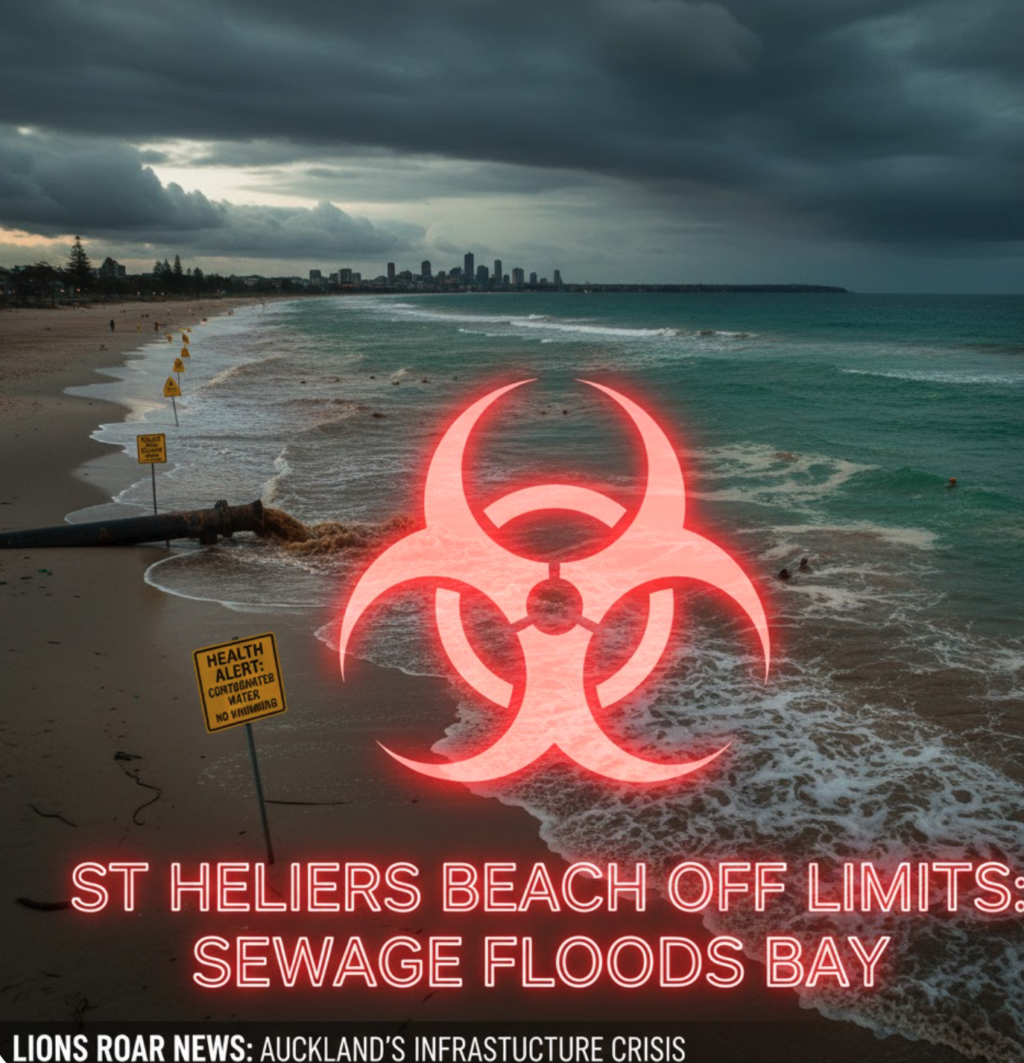
AUCKLAND, NZ – St Heliers beach, one of Auckland’s most beloved swimming spots, has been declared strictly off-limits to the public following a catastrophic wastewater overflow that has inundated the bay with raw sewage. Watercare, Auckland’s water and wastewater provider, has issued an urgent public health warning, advising residents to avoid all contact with the water due to extreme contamination risks.
The incident, which occurred late yesterday evening, saw large volumes of wastewater discharge directly into the Waitematā Harbour, turning the usually pristine St Heliers Bay into a hazardous health zone. Initial reports suggest the overflow was caused by a major blockage in a critical wastewater pipe, exacerbated by heavy rainfall.
? “Do Not Enter the Water”: Immediate Health Risks
Authorities have erected prominent warning signs along the entire length of St Heliers beach, urging people to stay out of the water. Swimmers, kayakers, paddleboarders, and even pets are at severe risk of exposure to harmful pathogens.
- Bacterial Contamination: The primary concern is the presence of faecal coliforms, E. coli, and other bacteria and viruses commonly found in raw sewage. These can cause gastrointestinal illnesses, skin infections, and respiratory problems.
- Long-Term Impact: The sewage will degrade water quality, impacting marine life and potentially leading to long-term environmental damage if not contained and cleaned up rapidly.
“Our immediate priority is public safety,” stated a spokesperson for Auckland Council’s Safeswim programme. “We strongly advise against any recreational activity in St Heliers Bay until further notice. This includes fishing, as shellfish and fin fish in the affected area may also be contaminated.”
? The Cause: Blockage and Overflow
Watercare has confirmed that the overflow originated from a significant blockage within its wastewater network. While investigations are ongoing, initial assessments point to a combination of factors:
- “Fatbergs” and Debris: Accumulation of fats, oils, greases, and non-biodegradable items (like wet wipes) that congeal into large, impenetrable masses known as “fatbergs.”
- Infrastructure Failure: The age and condition of Auckland’s wastewater pipes, some of which are decades old, make them vulnerable to blockages and collapses.
- Heavy Rainfall: Recent intense rainfall likely contributed to the surge in wastewater volume, overwhelming the system and forcing the discharge.
Watercare crews are currently on-site, working to identify the exact location of the blockage and implement a repair. The clean-up operation is expected to be extensive and could take several days, if not weeks, depending on the scale of the contamination.
? A Recurring Problem: Auckland’s Aging Infrastructure
This incident at St Heliers is not an isolated event but highlights a recurring and growing problem for Auckland. The city’s aging wastewater infrastructure is struggling to cope with rapid population growth and the increasing frequency of extreme weather events.
Environmental groups have long warned that underinvestment in wastewater management is leading to a steady increase in sewage overflows into Auckland’s harbours and beaches.
“This is another wake-up call for Auckland,” commented a representative from the Sustainable Coastlines charity. “Our infrastructure is failing, and our beautiful beaches are paying the price. We need urgent, long-term investment to prevent these preventable disasters from becoming the new normal.”
Residents are urged to report any further signs of contamination or unusual odours to Watercare’s helpline immediately.